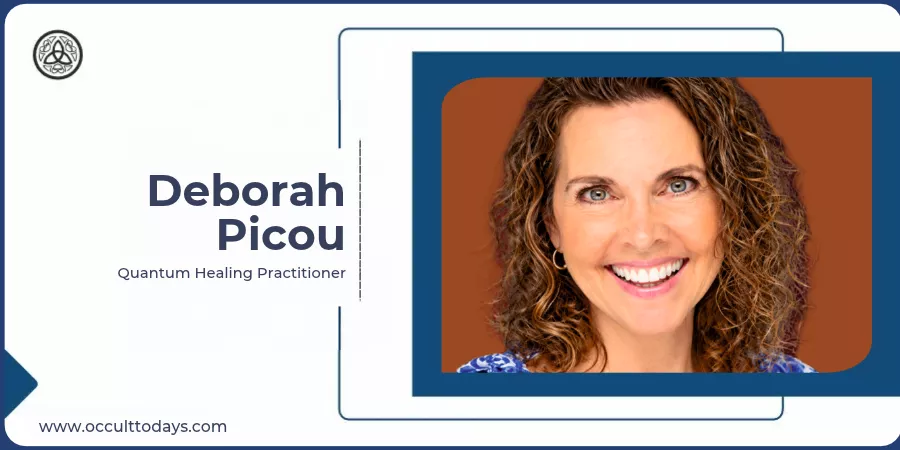
How a Lifelong Search for Healing Led Deborah to Explore the Emotional Patterns Forming Our Lives.
Many people spend years trying to understand why the same emotional struggles keep returning, even when they work hard to build happier relationships and more fulfilling lives. Childhood experiences can leave questions unanswered, influencing how people see themselves, respond to others, and find their place in the world. Sometimes, the search for answers begins with a personal struggle, an unexpected experience, or a desire to understand why certain patterns keep repeating.
For Deborah Picou, a lifetime of caregiving, personal health challenges and spiritual exploration gradually led her toward a deeper understanding of these patterns. What began as a search for answers to her own health concerns grew into a journey of learning about alternative healing approaches and the influence of childhood experiences.
Over time, this journey inspired her to ask the Divine Source a question that led to the development of Emotional Quantum Healing, an approach through which she helps clients explore the beliefs and experiences they carry into adulthood. Today, her work centers on a question that guides her: what if understanding how to decode the past could help people build a different relationship with themselves and their future?
The Roots of a Lifelong Calling
Many of the qualities that define Deborah’s work today, she believes, began to develop well before she had a clear sense of her professional future. Her childhood experiences placed significant demands on her sense of care and responsibility, helping lay the foundation for the person she would become.
“As is true with so many of the fabulous healers in our world today, I was always a bit different, even as a child and a young adult,” recalls Deborah.
Growing up, she played a significant role in the life of her younger sister, who had a disability. For 14 years during her childhood, this responsibility required her to be attentive, selfless, careful, compassionate, capable, caring and consistent.
Looking back, she sees a connection between those early experiences and the work she does today.
“As I write this, I can see that those traits I developed in my childhood prepared me to be the woman who could do the quantum healing work that I now do.”
Her experiences also shaped how she treated people outside her family. Even as a young girl, she felt drawn to those who were excluded or left without friends, choosing to stand beside them even when doing so made it harder to fit in with the popular girls.
She remembers befriending a girl who had been rejected by others. When that girl eventually moved to another city, Deborah found herself developing a close friendship with Lisa, a girl she genuinely enjoyed spending time with throughout high school.
The two shared a love of sports and dancing. Lisa loved ballet, while Deborah loved tap dancing, and their friendship brought her many happy memories.
Deborah interpreted the timing of that friendship as something meaningful.
“I felt that having Lisa’s friendship was God’s way of thanking me for what I had done for the other girl who had been rejected by others.”
This instinct to recognize someone else’s pain and bridge the distance between people became an important part of her understanding of compassion. Long before she began working with clients, she had developed a habit of looking for the person who needed kindness and finding ways to offer it.
Discovering Spirituality at Eleven
Deborah’s spiritual journey began when she was still a child. At around 11 years old, her parents sent her and her brother to a sleep-away camp so they could enjoy time being children without the responsibilities of caring for their younger sister.
The experience gave her an opportunity to explore something she already loved. While the other girls in her cabin remained asleep, Deborah would wake at six in the morning and make her way to the chapel.
She remembers enjoying these mornings and looking forward to religious studies during the school year, particularly the opportunity to sing hymns.
Her interest in spirituality continued into her teenage years. At 15, she changed her religious affiliation because she believed another church offered a stronger spiritual connection. She and her brother began attending church voluntarily for several hours each week, a routine that continued for years.
Eventually, Deborah began to feel that the strict dogma taught in the church left room for further questions. Her search for a spiritual path that felt more suitable to her continued.
At 16, she began experiencing what she later understood as a series of spiritual abilities. She recalls becoming aware of three healing energies emanating from her right hand, while energy seemed to enter through her left hand or the crown of her head.
The experience felt familiar because, according to her, both her father and paternal grandmother had similar abilities.
She also began having prophetic dreams that she understood as precognition of accidents that would happen the following day. Her intuition became increasingly sharp, and she developed a tendency to trust it.
At the same time, she became more aware of what she believed lay behind people’s words.
“I became very aware of what was behind the words people spoke. I was sensitive to what was the real issue driving them to say and do what they said and did.”
These experiences later became closely connected to her work with childhood experiences and emotional patterns. At the time, however, Deborah simply understood herself as someone who listened carefully and sensed what others were experiencing.
She also recalls beginning to channel at 16, although she had no name for the experience then. While doing her homework at night, she would sometimes receive what felt like helpful instructions, almost as though an intelligent presence were sitting beside her and helping her study.
“It seemed so natural that I didn’t give it a thought at the time.”
Only after five decades did she come to understand these experiences as channeling. Looking back, she began to recognize similar moments during conversations, when she had believed she was simply being a good listener.
Her spiritual inclinations had always felt natural to her. She did not see them as something separate from who she was, but as part of her everyday life. Over time, these early experiences became part of the wider journey that led her toward the healing practices she would later study and develop.
Searching for Answers to Health Problems
At 18, Deborah developed a thyroid issue and low blood sugar. She visited several doctors, but she remembers receiving little guidance about what was happening or how to manage the problems.
One of the most painful consequences was the loss of her long hair. Her mother’s solution was to cut it very short, but the change did nothing to resolve the underlying problem.
As Deborah recounts, “I did, and that solved exactly nothing! It never grew back. It was devastating.”
She continued struggling with the two health issues for years, trying to manage their effects without the answers she had hoped to find.
Around 2016, she visited Dr. Claudia Marcelo for an unrelated issue. During that consultation, she received a diagnosis of Hashimoto’s thyroiditis with episodes of Graves’ disease, an autoimmune thyroid condition.
Dr. Marcelo advised her to address her thyroid health and change her diet before pursuing other steps. Deborah credits the doctor with helping her considerably and introducing her to quantum healing and the work of Dr. Joe Dispenza.
The consultation marked an important turning point. Her search for answers about her own health opened the door to a wider interest in healing, spirituality and the relationship between personal experiences and well-being.
Through her sister-in-law, Susie, Deborah then learned about Quantum Healing Hypnosis Technique, commonly known as QHHT. She felt drawn to the method and decided to train as a practitioner.
Her decision developed from the same instinct that had guided many earlier choices in her life: when something felt meaningful, she wanted to explore it further.
Discovering New Perspectives Through QHHT
During her QHHT practicum, Deborah conducted a session with a new friend whom she barely knew. As part of the session, she explored the friend’s thyroid concerns through the framework of the technique.
She describes how, when she asked the client’s subconscious about her thyroid condition, the response suggested that the thyroid was in poor condition and that little could be done.
Wanting her client to be well, Deborah asked the subconscious to give her a new thyroid instead.
The response, according to Deborah, came through her client while she was in a trance and had no conscious awareness of the conversation.
“Ask us for one for yourself, and we’ll give you one at the same time.”
Deborah initially declined, explaining that the session belonged to her client rather than to her. When the request was repeated, she refused again. After it was raised for a third time, she accepted that she had received the message.
She recalls that, in that moment, she felt intense energy in her throat.
“It was wild.”
Shortly after the session, she arranged a blood test to check her thyroid. The results showed that her thyroid was functioning normally and that it has continued to do so ever since.
For Deborah, the experience radically changed her understanding of what she believed healing could make possible. It strengthened her interest in QHHT and encouraged her to continue learning about the practice.
Her commitment to further study was also influenced by her husband, Michael, who had previously encouraged her to pursue a master’s degree when she decided to study Waldorf Education for the purpose of homeschooling their two sons.
She had followed his advice and completed the degree. Later, when she had reached Level 2 QHHT practitioner status, she considered a similar step.
“As you might expect, I didn’t have any plans to become a Level 3 QHHT Practitioner until I thought about how my husband looked at things differently than I do.”
Remembering the value she had found in her earlier studies, she decided to pursue Level 3 QHHT practitioner certification.
“Well, that worked out nicely. My clients were thrilled with their QHHT sessions.”
The decision deepened her involvement in the practice and gave her another opportunity to develop the skills she wanted to bring to her clients.
From Personal Discovery to Helping Others
Just before completing her QHHT practitioner training, she came across a YouTube presentation about Emotion Code, a technique developed by Dr. Bradley Nelson in the early 1990s.
She listened to a 45-minute webinar, thinking that if she could use even a small amount of what she had learned to help herself, she would consider training professionally.
Her first attempt involved her own severe allergy to cats. She had experienced serious allergic reactions after being near a cat or cat hair and had been rushed to the emergency department several times.
She decided to try Emotion Code on herself in relation to the allergy. She says the experience brought a considerable improvement, allowing her to spend time around cats without the same severe reactions.
She later learned that there were additional details involved in carrying out the technique correctly, but she felt that the experience had helped her.
About eight years later, one of her sons adopted a cat. After spending substantial time with the animal, Deborah began feeling less than optimal again. She consequently became more careful about how much time she spent around the cat and avoided touching her eyes while she was with it.
She has considered another Emotion Code session to continue addressing the problem. Her earlier experiences, however, had encouraged her to explore the practice further.
She began seeing clients at Thermae Retreat, where she offered Emotion Code and QHHT sessions. Demand grew quickly, and she found herself with a busy schedule.
Her clients, she says, were pleased with her work, and the practice continued to grow over the following years. Eventually, she had to consider opening a space of her own.
This time, she gave the decision more thought and went ahead with it.
Looking back, she describes the opportunity to help others as one of the most rewarding parts of her life. She has collected many stories from the sessions she has conducted and remains fascinated by the experiences her clients bring into the room.
“I simply do my best with each of my clients and the results are fabulous.”
She continues to approach opportunities with curiosity, gratitude and openness, believing that the next step often becomes clear through the experience of taking the previous one.
Four Approaches to Emotional and Spiritual Exploration
Deborah works with four approaches: Quantum Healing Hypnosis Technique, Emotion Code, Biofield Tuning and Emotional Quantum Healing. Each has a different background and process, and she explains them according to how she understands their purpose.
Quantum Healing Hypnosis Technique
QHHT was developed by Dolores Cannon in the 1960s. Deborah describes it as a technique that guides clients into a natural brain state called theta.
“You spent the first 7 years of your life primarily in theta.”
During a session, clients prepare questions they want to explore, and Deborah presents those questions while guiding them through the process.
According to her, within the QHHT framework, clients may visit other lives or encounter experiences that their subconscious selects because it believes the information could help them better understand their present lives.
“Your subconscious speaks through you. Your only limits are the ones you place on yourself.”
Deborah sees the sessions as opportunities for clients to experience heightened possibilities, noting that many people have described their experiences as life-changing.
Emotion Code
Developed by Dr. Bradley Nelson in the early 1990s, Emotion Code focuses on identifying and releasing what its practitioners describe as emotional energy that remains trapped after difficult experiences.
Deborah explains the concept through the idea that emotions can become trapped when they are never fully felt or experienced. She believes these emotions may be linked to physical or emotional difficulties and that working with them can help people feel freer.
She often uses the expression that the body keeps score, referring to her belief that life experiences leave an energetic record in the body and the surrounding field.
She also refers to the method’s estimate that an average 35-year-old adult may have upwards of 300 trapped emotions. This figure belongs to the framework of the practice rather than an established scientific measure.
For Deborah, Emotion Code provides a way to explore the emotional experiences that may be affecting how a person feels and responds to life.
Biofield Tuning
Biofield Tuning was developed by Eileen Day McKusick in the 1990s. It uses tuning forks and sound-based techniques, with practitioners describing the process in terms of coherent frequencies and information to which the body responds in kind.
Deborah emphasizes that the stable, consistent frequencies of the tuning forks provide the nervous system with rhythm, sensation and information that it can recognize.
She believes the body responds to these frequencies, encouraging relaxation and helping people feel less weighed down by what she describes as stuck energy.
She describes this effect as ‘soul retrieval,’ which she understands as the return of light photons and information to the body’s toroidal field.
These descriptions reflect her understanding of the practice and its energetic framework.
Emotional Quantum Healing
Emotional Quantum Healing is the approach Deborah developed as a result of receiving a channeled message. She says she channeled the technique in 2022 after asking the Divine Source a question about the recurring emotional difficulties she observed among her clients.
The approach focuses on an encoded message she identifies within childhood experiences. Through a series of questions, she helps clients explore the origins of recurring patterns and the beliefs that may have shaped their lives.
The process leads to what she calls the ‘Authentic Aligned Belief,’ a unique statement created specifically for each client. Deborah then teaches clients how to work with this statement and use ideas about neuroplasticity to support changes in their thinking and behavior.
She sees the method as a way to help people understand why certain cycles keep returning, learn how to change them more easily, recognize their own needs and work toward a life that better reflects their authentic selves.
The Question That Led to Emotional Quantum Healing
The idea for Emotional Quantum Healing came to Deborah on a Sunday in January 2022. She was sitting at her desk in her home office, reviewing the sessions and clients scheduled for the coming week, when she began thinking about the similar frustrations people had described.
She had noticed that many clients spoke about related difficulties in both childhood and adulthood. Although she already knew techniques that could help them, she felt that an important piece of the puzzle was missing. Deborah realized that these recurring patterns must have a purpose.
She wanted to understand why these patterns continued and whether understanding their purpose could help people move forward.
She asked the Divine Source, ‘What is the point of children becoming addicted to repeating the negative trapped emotions of their childhood?’
Deborah believed that if these experiences served a purpose, understanding that purpose might reveal a way out of the emotional struggles people carried into adulthood.
At first, she drew a blank. Seeking guidance from the Divine Source, she spent the next few hours typing what she describes as the messages she received.
After approximately two hours, the message began to make sense to her. She says she came to understand a specific series of questions that could help clients uncover patterns in their own experiences.
She also realized that revealing the purpose of the questions at the beginning might influence the answers. If clients knew where the questions were leading, they might analyze their responses instead of speaking from the heart.
To preserve the process as she intended it, Deborah decided to have clients answer her questions without knowing where the answers would lead.
The following week, she began using EQH with her clients.
She says the results were immediate and encouraging. The words that revealed the patterns came directly from the clients themselves, rather than from her interpretation.
“Their words, not mine.”
She remembers that clients recognized the truth of their own answers and often uncovered further insights as the process continued.
“In that moment each client was heard, seen and validated in a way they had never been before.”
For Deborah, this was one of the most meaningful aspects of the method. She believed that clients could begin to see their difficulties differently when the discoveries came through their own words and experiences.
She describes the process as quick, easy and joyful, and it became a central part of her work.
Understanding the Roots of Childhood Patterns
Over the years, Deborah has come to be certain that many recurring adult difficulties have roots in childhood experiences. She sees these patterns in people who struggle with relationships, self-worth and a sense of security, even when their lives appear successful from the outside.
In her view, many people carry unmet emotional needs into adulthood. They want to feel loved, seen, heard, wanted, accepted and respected, and when these needs remain unmet, the resulting longing can influence their choices and behavior.
She sees that external distractions such as shopping, alcohol or constant activity may leave the deeper emotional need unresolved.
Her work encourages clients to look at their experiences and consider how they may have shaped their beliefs about themselves and others.
Deborah often sees people who describe themselves in negative terms while hoping that others will view them differently. She believes that many people carry childhood wounds they were meant to outgrow but have come to treat as permanent parts of their identities.
She sees these experiences as a possible springboard to a person’s authentic self.
“The second concept ties into this springboard concept in that each person brings into their life experience an encoded message which is meant to be decoded.”
For Deborah, understanding this message can help people recognize how their past has influenced their present and how they might choose to respond differently in the future.
She often encourages clients to consider another way of viewing difficult experiences: rather than seeing everything as something happening to them, they can explore what those experiences may teach them.
“When you realize that, you can see each challenge as a loving teacher who has come to guide you.”
Her approach places importance on self-awareness, personal responsibility and the willingness to engage with difficult emotions. According to her, recognizing a pattern is an important step, but lasting change also requires people to apply what they learn in everyday life.
Questions People Bring
Some of the most revealing conversations in Deborah’s practice involve people who appear successful yet continue to struggle with insecurity.
She has worked with people who have achieved significant professional success but fear being exposed as imposters. Others have accumulated wealth but remain anxious about the possibility of poverty.
For Deborah, these experiences show that external achievements may leave deeper emotional questions unanswered.
“Many are the times where people, even very successful people, despite their obvious accomplishments in life, feel like imposters. They fear being found out.”
She believes the answer to these fears is found within the person rather than in further achievements or possessions. In her view, the underlying issue often involves a childhood wound or a belief that has continued to influence the person’s life.
To explain this, she uses the image of an emotional prison made from modeling clay. The prison may feel solid, but its bars can be reshaped once the person understands what is holding them there.
“Their prison bars are made from modeling clay. Their prison door locks and unlocks from the inside.”
Deborah describes the encoded message as the key to that prison and sees her role as helping clients discover it and understand how to use it.
She also has often experienced that even people who remember their parents as loving and their childhoods as happy may still carry unresolved emotional patterns. In those cases, she says, more conversation may be needed to understand the difficulties they experience.
Her work focuses on helping clients approach these questions with curiosity and a willingness to examine their own experiences.
Creating a Safe Space for QHHT
Because QHHT can involve deeply personal experiences, including scenes that clients interpret as past lives, Deborah places considerable importance on creating an environment where people feel comfortable and respected.
She credits Dolores Cannon with developing a technique that, in her view, provides a safe and open setting for exploration.
“First of all, the sessions are confidential. Secondly, I take as much time as needed to talk about everything the client needs to express during their appointment.”
Deborah explains the process before the guided journey begins, including what clients can expect and how they can approach the experience. She waits until they feel ready, confident and comfortable before proceeding.
Within the QHHT framework, she understands that the client’s subconscious chooses the experience that is most appropriate for them. Her role is to guide the process rather than decide what the client should encounter.
“I do not choose it. I am only the guide.”
She also emphasizes theta as a natural state of consciousness associated with the transitions into and out of sleep. According to her, people spend time in this state before falling asleep and upon waking, and it plays an important role in early childhood.
According to her understanding of QHHT, children spend much of their first seven years in theta, the same period during which the subconscious develops.
Deborah also refers to a change she associates with December 21, 2012, a date linked to the end of a cycle in the Mayan calendar.
In her view, clients have had their conscious minds present during QHHT sessions since then.
She considers this an important development because it allows clients to remain aware during the experience.
She finds the subject fascinating and believes it offers further possibilities for exploration, although she acknowledges that explaining the details would require a separate article.
For Deborah, the essential point remains that clients should feel informed, respected and comfortable throughout the session. She sees herself as a guide and views the experience as something that should unfold according to the needs of the person undertaking it.
What Emotional Freedom Means to Her
For Deborah, emotional freedom means living as one’s authentic self and having the ability to make conscious choices about feelings, identity and behavior.
“Simply put, true emotional freedom is feeling, being and living as your authentic self.”
She also describes this as being the emotional sovereign of one’s life, with the ability to choose how to respond without being governed by unresolved childhood patterns.
However, she makes an important distinction between authenticity and acting on every emotion without considering its effect on others. In her view, emotional freedom also brings the responsibility to behave appropriately and functionally.
She believes that people can learn to recognize their emotions without allowing old experiences to determine every decision they make.
For Deborah, the goal is to help people develop a healthier relationship with themselves, understand their patterns and take responsibility for their choices.
She sees this as a process that requires commitment. Understanding a pattern may bring clarity, but people must also apply what they learn in their daily lives if they want to build different habits and relationships.
Learning from the Clients
Watching clients work toward a better life brings Deborah considerable joy. She values the moments when people remain present during sessions, learn what they need to understand and apply those lessons consistently.
Over the years, she has witnessed clients continue working toward a more authentic way of living despite difficult circumstances. These experiences have strengthened her belief in the human capacity for change.
She says the process requires a vision of the person one wants to become, together with humility, strength, commitment and personal pride.
Each time she witnesses a client making progress, she feels encouraged in her work and in the message she believes she received in January 2022.
She describes herself as a champion of the authentic self in every client, helping people recognize their own strengths and move toward the life they want to build.
Her role, as she sees it, is closer to that of a coach than a leader who decides the direction for someone else.
She wants clients to cross their own finish lines with confidence and a sense of achievement.
“When my clients win, I win.”
Person Behind the Practitioner
Away from her practice, Deborah’s interests reveal a person who enjoys learning, movement, creativity and time outdoors.
She has always been athletic and enjoys hiking in the woods, kayaking and floating in the ocean. She lives by the water, making it easy for her to take her kayak out whenever she wants to explore.
She particularly enjoys floating in the sea and imagining herself in Greece, surrounded by people whose long, healthy lives she admires.
Dance is another important part of her life. She takes Argentine tango and tap dancing lessons, both of which are among her favorite styles. East Coast Swing has recently joined her top three.
She describes the experience of dancing East Coast Swing as the closest thing she can do to flying while keeping her feet on the ground.
Having grown up riding horses, Deborah continues to adore them and dreams of buying a horse ranch one day.
Her creative interests include painting, sewing and knitting, activities she pursues with considerable dedication. She also spends a good deal of time meditating and describes some of her meditations as long and deeply absorbing.
Yoga is another interest. She completed Kundalini Yoga teacher training, although she had no particular plan to teach classes. She tends to immerse herself in subjects that capture her attention, learning as much as she can about them.
The same curiosity led her to complete a master’s degree in Waldorf Education when her sons were young. She undertook the degree to support her plans to homeschool them and remains enthusiastic about Waldorf education.
At home, cooking is another source of enjoyment. Her husband, Michael, thinks she is a fantastic cook, and she prefers to let him maintain that opinion. She enjoys preparing delicious meals, often improvising with whatever ingredients happen to be available in the fridge.
These interests offer another expression of the curiosity that has shaped her professional life. Whether she is learning a dance style, exploring a spiritual practice or preparing a meal, she enjoys becoming absorbed in the experience.
Recognition and the Responsibility of Work
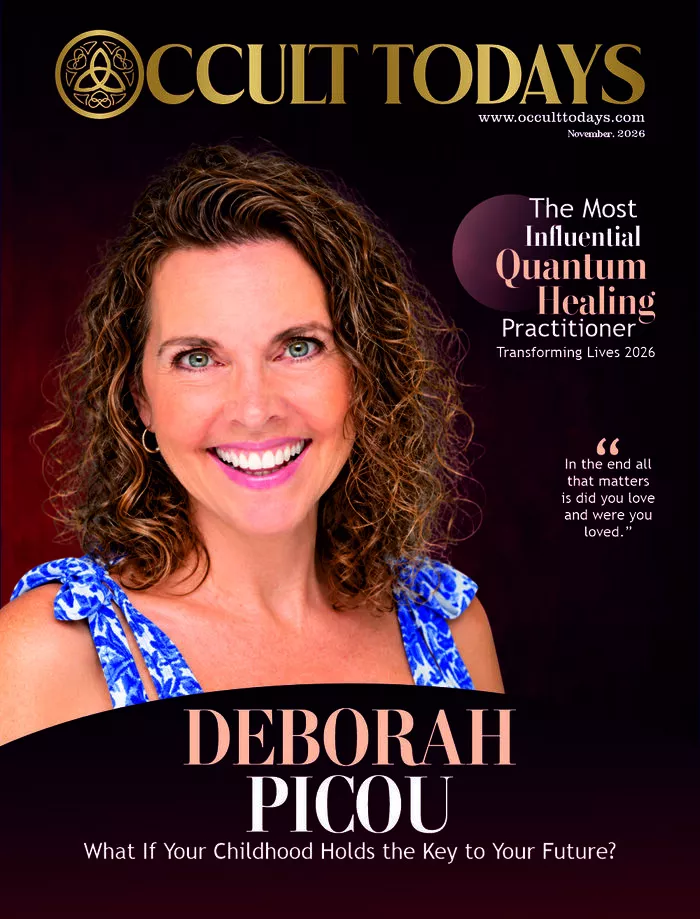
Occult Today has recognized Deborah Picou as “The Most Influential Quantum Healing Practitioner Transforming Lives 2026.”
The recognition holds meaning for her, although she says becoming the most influential anything was never her ambition.
“To be honest, I never planned to be the most influential anything.”
She elucidates that she has always aimed to do her best in everything she undertakes. With every client, she has tried to provide excellent work and help the person leave feeling better about themselves.
For Deborah, learning has been a lifelong commitment. She has continued to study, explore and develop her skills so she can serve her clients as effectively as possible.
She sees helping another person through an emotional healing journey as a sacred responsibility, describing it as her dharma. She believes that this calling took a lifetime of experiences to grow into.
Her childhood caregiving role, her own health struggles and her spiritual exploration all contributed to her understanding of what it means to support another person.
She describes her work as a way of putting her experiences to use in service of others. Rather than seeing herself as someone who leads clients toward a predetermined outcome, she views her role as helping them discover their own answers.
She wants clients to move toward their goals with confidence, knowing that their progress belongs to them.
For Deborah, the recognition brings a responsibility to continue learning, remain committed to the work and treat every person with care.
Taking Emotional Quantum Healing to More People
After several years of using EQH with clients and seeing the results she believes the method has achieved, Deborah began writing a book titled When the Wound Becomes the Healer.
She intends to publish the book and then develop a practitioner training and certification program, allowing more people to learn the approach and work with clients.
She is working on this project with her business partner, Jorge Polo, whom she describes as highly capable. He is also developing an application intended to help certified practitioners maintain the level of results Deborah has experienced in her own practice.
A dedicated website, emotionalquantumhealing.com, is currently under construction to support the project.
Alongside the training program, Deborah has begun co-hosting retreats that combine her technique with the approaches used by her co-hosts. She is also preparing two further projects with other partners, although she intends to share details when the time is right.
These plans reflect her desire to make EQH available to more people while maintaining the standards she wants the practice to uphold.
She hopes to train practitioners who can help others explore their childhood experiences, understand recurring patterns and work toward greater emotional freedom.
A Vision of Emotional and Spiritual Growth
Deborah’s vision extends beyond her individual practice. She hopes to help people understand what she considers the encoded messages within their childhoods so they can become the emotional sovereigns of their own lives.
In her view, emotional growth provides a foundation for spiritual development. She maintains that people must first understand themselves and their emotional patterns before they can grow spiritually in a meaningful way.
She sees the present period as a time of ascension and hopes that people will develop emotionally and spiritually to live in greater harmony with one another.
Her wider vision includes a future in which humanity can live peacefully alongside highly evolved beings from other planets. However, she considers the first step toward that possibility to be learning to live peacefully with fellow human beings on Earth.
For Deborah, many conflicts arise when people lose touch with their authentic selves and allow unresolved childhood experiences to influence their behavior.
She suggests these wounds can have far-reaching effects, spreading through relationships, communities and society. While she sees the possibility of growth within the current human experience, she also maintains that growth requires conscious effort.
Without emotional growth, she worries that people will continue carrying harmful patterns into their relationships and positions of influence, creating struggles that could otherwise be avoided.
Her hope is for a world with less suffering, hatred and conflict, and more love, kindness, gentleness, generosity and care.
She wants people to remember their shared humanity and recognize that another person’s pain matters.
“If you hurt, I hurt.”
For Deborah, these values are central to what makes people truly happy and satisfied. She believes that genuine love and compassion are what people ultimately seek, even when their lives become distracted by other pursuits.
She has worked tirelessly seven days a week, year after year, since 2016, pursuing the work she feels called to do. She intends to continue for as long as she is able, while training others to carry the work forward.
She hopes that more people will learn to understand their emotional experiences, live with greater authenticity and build relationships grounded in love and care.
The Message She Wants to Leave Behind
Deborah’s journey has taken her from childhood caregiving and early spiritual experiences to years of searching for answers about her health, studying alternative healing approaches and developing a method of her own.
She did not begin with a clear plan for the practice she built. Instead, she followed her curiosity, pursued the subjects that mattered to her and continued learning as opportunities arose.
Today, she sees her work as a way to help people understand themselves more deeply and find a path toward greater emotional freedom. Her plans for a book, practitioner training, retreats and further projects reflect her wish to extend that work to more people.
She hopes to leave a legacy in which people are better able to recognize their own emotional patterns, take responsibility for their choices and live in a way that reflects their authentic selves.
At the heart of that ambition is a message she says she received through channeling from Source in 1998. It remains the clearest expression of what she wants people to remember:
“In the end all that matters is did you love and were you loved.”
For Deborah, that is the point to which everything returns: the care she learned in childhood, the questions that shaped her spiritual journey, the work she does with clients and the future she hopes to help create.
Love is the message she wants to leave behind, and the principle that continues to guide the work she intends to do for the rest of her life.
If you want to be informed when Deborah’s new book, When the Wound Becomes the Healer, is published, please email her.
You can reach Deborah by email at deborah@quantumhealingpossibilities.com
Or visit her website: QuantumHealingPossibilities.com