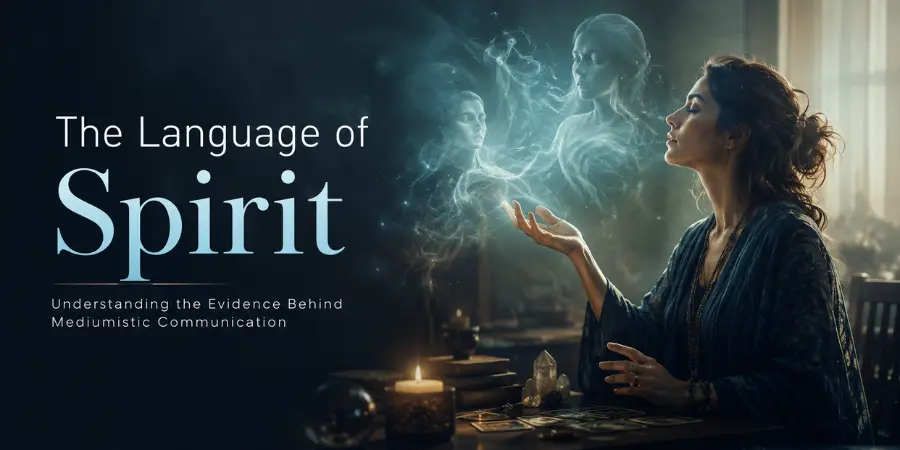
When researchers at the Windbridge Research Center in Arizona conducted double-blind studies on mediumistic communication between 2008 and 2016, they didn’t expect findings that would challenge their assumptions about what evidence in this domain could look like. Their rigorous protocols included multiple blind conditions preventing fraud, control groups enabling statistical comparison, and independent scoring of reading accuracy by recipients who had no contact with mediums. The results, published in peer-reviewed journals including Explore: The Journal of Science and Healing, showed that tested mediums produced information scoring significantly above chance under conditions eliminating conventional explanation. These findings haven’t resolved fundamental questions about mediumistic communication’s nature and mechanism, but they have established that something measurable and reproducible occurs during medium readings that serious scientific investigation cannot simply dismiss. Understanding what research reveals, what remains genuinely uncertain, and how practitioners and researchers interpret this complex evidence landscape provides valuable framework for anyone navigating this intellectually and emotionally charged territory.
What Research Has Demonstrated
The scientific investigation of mediumistic communication has produced a body of evidence that defies both easy dismissal and simple acceptance. Gary Schwartz at the University of Arizona’s Laboratory for Advances in Consciousness and Health conducted a series of studies beginning in the late 1990s using increasingly rigorous methodologies to test whether mediums could produce accurate information about deceased individuals under controlled conditions.
His research demonstrated that tested mediums produced accurate information about deceased individuals at rates significantly exceeding chance, even when recipients provided no feedback during sessions and experimenters remained blind to accuracy until blind scoring was completed. The studies generated significant scientific controversy, with critics identifying methodological limitations and Schwartz defending his protocols. This scientific debate itself represents progress, replacing dismissal with serious methodological engagement.
Windbridge Research Center’s mediumship studies under Dr. Julie Beischel advanced methodology substantially through what they call quintuple-blind protocols, where mediums, sitters, experimenters, analysts, and study administrators each operated without information available to others. Under these conditions, mediums still produced accuracy rates significantly above what random chance would predict, suggesting that normal sensory information channels don’t adequately explain observed results.
Psychological Frameworks for Understanding Readings
Psychological research offers several frameworks explaining aspects of mediumistic communication without necessarily resolving ultimate questions about its nature. The Barnum Effect, where individuals accept vague personality descriptions as uniquely personal, explains how poorly conducted readings generate subjective feelings of accuracy without demonstrating genuine information transfer.
However, Windbridge research specifically designed studies to test beyond Barnum Effect explanations by requiring specific, verifiable information rather than general personality descriptions. When mediums produced accurate information about deceased individuals’ specific names, relationships, causes of death, and personal memories that recipients confirmed as accurate in blind conditions, Barnum Effect explanations become less satisfying.
Cold reading techniques, where practitioners use observational cues, statistical knowledge about common experiences, and conversational feedback to generate seemingly accurate information, explain many readings where clients unconsciously provide information that skilled communicators reflect back convincingly. The challenge for researchers involves designing conditions that genuine cold reading cannot satisfy, which rigorous studies attempt to accomplish.
The Survival Hypothesis and Alternative Explanations
Research findings that exceed statistical chance require explanation. The survival hypothesis suggests that consciousness continues after physical death and that mediums access information from deceased individuals directly. This hypothesis aligns with mediums’ own descriptions of their experience and with many recipients’ subjective sense of genuine contact.
Alternative explanations include super-psi, the hypothesis that living individuals possess extraordinary extrasensory perception capabilities enabling accessing information through currently unknown psychological mechanisms without survival of consciousness. This explanation preserves mediumistic accuracy findings while avoiding claims about post-death survival that many scientists find more difficult to accept.
Dr. Stephen Braude, philosopher and parapsychology researcher at the University of Maryland, argues that super-psi and survival hypotheses both face significant evidential challenges, and that current evidence doesn’t cleanly distinguish between them. This intellectual honesty about evidentiary limitations characterizes serious scholarship in this domain, contrasting with both credulous acceptance and dismissive rejection that superficial engagement often produces.
What Practitioners Report About Communication
Mediums themselves describe their experience of communication in ways that provide phenomenological data about the process regardless of ultimate metaphysical interpretation. Consistent patterns across diverse practitioners include experiencing information as impressions, images, emotions, or words that feel externally sourced rather than internally generated, recognizing a distinct quality to mediumistic information that differs from imagination or memory, and experiencing uncertainty and error in ways inconsistent with simple fabrication.
Evidential mediums specifically trained to produce verifiable information rather than comfort-generating general statements describe the challenge of accurately translating whatever information they receive into language recipients can verify. This translation challenge may account for much inaccuracy in readings, as information that mediums experience symbolically may not correspond directly to literal facts recipients can confirm.
Implications for Grief and Healing
Whatever ultimate conclusions future research produces about mediumistic communication’s mechanism, its psychological impact on grief receives increasing attention from mental health researchers. Dr. Erlendur Haraldsson’s research across multiple countries found that individuals who believed they had experienced contact with deceased loved ones, whether through mediums or spontaneous experiences, demonstrated better grief outcomes than those without such experiences.
This finding doesn’t require accepting survival hypothesis to recognize therapeutic value. Whether mediumistic experiences reflect genuine contact, psychological processes creating meaningful healing experiences, or something genuinely novel that current frameworks inadequately describe, their beneficial impact on bereaved individuals represents important consideration for grief support approaches.
Where Research Points
The evidence behind mediumistic communication currently supports several conclusions while leaving fundamental questions genuinely open. Something measurable occurs during rigorous mediumistic studies that chance and conventional fraud explanations don’t adequately account for. Psychological frameworks explain some but not all mediumistic phenomena under controlled conditions. The survival hypothesis and alternative explanations both remain scientifically viable without definitive evidential resolution. And therapeutic benefits appear regardless of ultimate metaphysical conclusions.
For those navigating this evidence landscape, intellectual honesty requires resisting both enthusiastic acceptance and reflexive dismissal. The language of spirit, whatever its ultimate source, speaks to experiences of loss, connection, and meaning that scientific investigation continues exploring with increasing rigor. That ongoing inquiry, pursued with both methodological care and genuine openness to evidence wherever it leads, represents the most honest engagement with questions that matter deeply to millions navigating grief, loss, and the enduring human desire for connection beyond death.