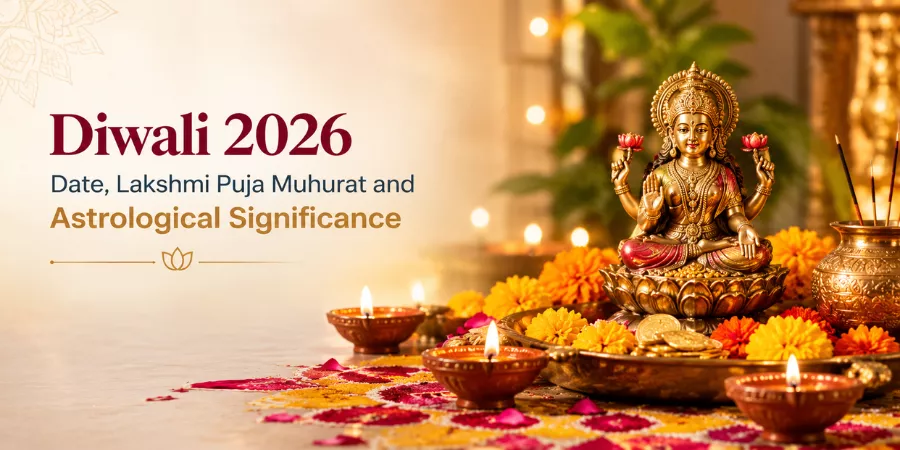
Diwali is the Hindu festival of lights: diyas at the door, family around the table, and a prayer for a prosperous year. It also happens to arrive right when many of us start thinking about money, plans and what the next year should look like. If you run a business, that timing is worth using.
Diwali 2026 falls on Sunday, 8 November, and the main Lakshmi Puja happens in the evening. Families worship Goddess Lakshmi for wealth and Lord Ganesha for wisdom and cleared paths.
When is Diwali 2026? Date and Lakshmi Puja Muhurat
Diwali is the festival celebrated on Kartik Amavasya, the new-moon day of the Hindu lunar calendar. In 2026, that day is Sunday, 8 November.
Lakshmi Puja is the evening worship of Goddess Lakshmi. Drik Panchang lists 5:54 PM to 7:50 PM as the recommended window in New Delhi.
Lakshmi Puja Muhurat on 8 November 2026:
| City | Muhurat |
| New Delhi | 5:54 PM to 7:50 PM |
| Mumbai | 6:27 PM to 8:27 PM |
| Pune | 6:24 PM to 8:24 PM |
| Bengaluru | 6:17 PM to 8:20 PM |
| Chennai | 6:07 PM to 8:09 PM |
| Kolkata | 5:20 PM to 7:18 PM |
Before you plan the evening, check a panchang for your own location and ask the elders at home about your family’s customs.
The Amavasya tithi starts at around 11:27 AM on 8 November and runs until about 12:31 PM on 9 November. The puja is held on the evening of the 8th because that’s when the tithi lines up with the traditional evening worship.
What is the Astrological Significance of Diwali 2026?
Diwali’s astrological significance comes from its place on Kartik Amavasya, the night when Goddess Lakshmi is worshipped for prosperity. Three ideas sit at the heart of it.
- Light on the darkest night. Amavasya is the new moon, so the sky is at its darkest. Lighting diyas then stands for knowledge winning over ignorance. For many families it also feels like a reset, a moment to look back at the year gone by.
- Lakshmi and prosperity. She represents wealth, abundance and good fortune. The prayer is for prosperity that comes with peace of mind, and it nudges you to think about how you earn, keep and spend what you have.
- Ganesha and good judgement. He’s worshipped right beside Lakshmi, and that pairing says something. Money without judgement doesn’t last long.
A fair note: auspicious timings are a matter of faith and tradition, not a guarantee of financial results. What the festival does give you are habits worth keeping, such as reflecting, planning and spending with care.
Diwali Leadership Lessons for Business Growth
Diwali leadership lessons are the practical management ideas you can take from the festival’s themes of renewal, prosperity and wisdom. Treat them as a prompt to review your business. A puja can’t replace a sound decision.
- Start with an honest look at where you stand
Think of the deep clean every home gets before Diwali. Your business needs one too. Sort out what’s working, what has stopped earning its place and what’s been ignored for too long.
Before you set bigger targets, look at revenue trends, customer retention, bottlenecks and what your team needs. A few questions to start with:
- Which products or services bring steady returns?
- Where are costs climbing without adding value?
- Which customer relationships have been neglected?
- What will you need to be good at over the next 12 months?
- Take financial discipline as seriously as sales
Lakshmi Puja is about prosperity, but holding on to it takes more than chasing revenue. You need working capital, spending rules that make sense, debt you can carry and a cushion for surprises.
Cash flow is where the truth shows up. Plenty of businesses report strong sales and still struggle to pay salaries because the money is sitting in unpaid invoices. Before you expand, check:
- Cash reserves and upcoming obligations
- Payment cycles and outstanding receivables
- The likely return on what you plan to invest
- Debt commitments and financial risks
- Where essential spending ends and “nice to have” begins
- Let ethical leadership protect trust
Ethical leadership means making decisions that respect your customers, employees, suppliers, investors and community, even when a shortcut would pay more this quarter. Your long-term success depends on people seeing you as reliable.
That looks like paying suppliers on the agreed date, being straight with customers, keeping clean accounts and never dressing up your numbers. Trust takes years to build and one bad decision to lose.
- Let go of what’s outdated
Diwali cleaning is also a good excuse to clear out old habits. Maybe an approval step exists only because it always has. Maybe someone still produces a weekly report nobody reads.
Review your processes, ask your team what slows them down and look for repetitive tasks you can simplify. You don’t need to overhaul everything. Start where the payoff is obvious.
- Let the long view guide short-term choices
Festive shopping and business investment test the same muscle: what you want now versus what you’ll need later. A new office, extra hires or a product launch should be judged against your whole financial picture.
Not every opportunity deserves a yes today. Some should go first, some need more homework and some can wait. Keeping the bigger picture in mind helps you tell lasting value from a passing thrill.
What is Chopda Pujan? The Diwali Tradition for Business Owners
Chopda Pujan is the worship of account books or ledgers on Diwali, mostly observed by Gujarati business families and traders. It’s a prayer for success in the coming year, and in some business communities it also marks the start of a new accounting cycle.
The ritual is not really about the paper. It ties together business, responsibility and hope for what’s ahead.
Most of us keep digital books now, but the idea still works. Use Diwali to go through your bookkeeping, reconcile accounts, chase pending payments, check budgets and set targets. The prayer carries the hope, and clean records and careful planning do the rest.
How to Use Diwali 2026 for a Fresh Start in Your Business
A fresh start works better as a short list you will actually follow than a long list of resolutions. Here is where to begin:
- Review your finances: Compare real revenue, costs and cash flow against this year’s targets.
- Set realistic goals: Choose two or three priorities for the next quarter and let the rest wait.
- Look after your customers: Thank loyal ones, ask for feedback and fix the complaints that keep coming up.
- Recognise your team: Say thank you properly, and ask what they need to do their best work.
- Revisit risks: Check supplier dependence, compliance requirements and your backup plans.
- Commit to ethical practice: Make sure your pricing, contracts, payment habits and policies match what you say you stand for.
Conclusion
Diwali 2026 brings together faith, family and the idea of starting fresh. Lakshmi Puja is a prayer for prosperity, and the lamps, the wisdom and the renewal that come with it invite you to think about how you’ll approach the year ahead.
For business owners, the takeaways are down to earth. Planning gives you direction, financial discipline keeps you stable, ethical leadership earns trust and clearing out the old makes room for better. Luck helps, but lasting success comes from good decisions, reliable systems, capable people and a willingness to learn when things go wrong.
So, while the diyas burn and the prayers go up, it’s worth asking yourself what prosperity actually means: creating value, meeting your responsibilities and building a business that grows without giving up its principles.
Frequently Asked Questions
When is Diwali in 2026?
Diwali is on Sunday, 8 November 2026. The main Lakshmi Puja is in the evening, so check your local panchang for the exact timing.
What is the Lakshmi Puja muhurat for Diwali 2026?
In New Delhi, it’s 5:54 PM to 7:50 PM IST on 8 November 2026. It varies by city, so use a panchang for your location.
What is the astrological significance of Diwali?
Diwali falls on Kartik Amavasya and centres on worshipping Goddess Lakshmi for prosperity. It also stands for light, wisdom and renewal. Auspicious timings are part of tradition and belief, not scientific guarantees.
What can businesses learn from Diwali?
The festival is a good time to think about financial discipline, planning, ethical leadership and long-term goals. Go through your accounts, set targets you can reach and strengthen your ties with employees, customers and suppliers.
Why do businesses perform Chopda Pujan?
It’s the worship of account books or ledgers during Diwali, done in hope of a prosperous business year. It also gives owners a natural reason to review their records and plan ahead.